On Sunday 25 October, the clocks go back an hour. For many people, that means a welcome extra hour in bed. For people living with sight loss, it also signals the start of a season when daylight fades earlier and getting out and about takes a little more thought.
Low light changes how everyone sees, but the effect is greater when vision is already reduced. Fine detail becomes harder to pick out, glare from headlights and street lamps can be difficult to cope with, and routes that feel familiar at noon may seem less certain by late afternoon. Some people respond by going out less, which can make it harder to keep up with friends, activities and everyday routines.
Plan journeys around daylight
Planning ahead can make a real difference. Where you can, schedule appointments, shopping trips and errands for the middle of the day, when daylight is at its best. Consider the journey home too, especially if an appointment might overrun. A small torch kept in a coat pocket is handy for checking a doorstep, finding a keyhole or reading a sign.
Make indoor lighting work for you
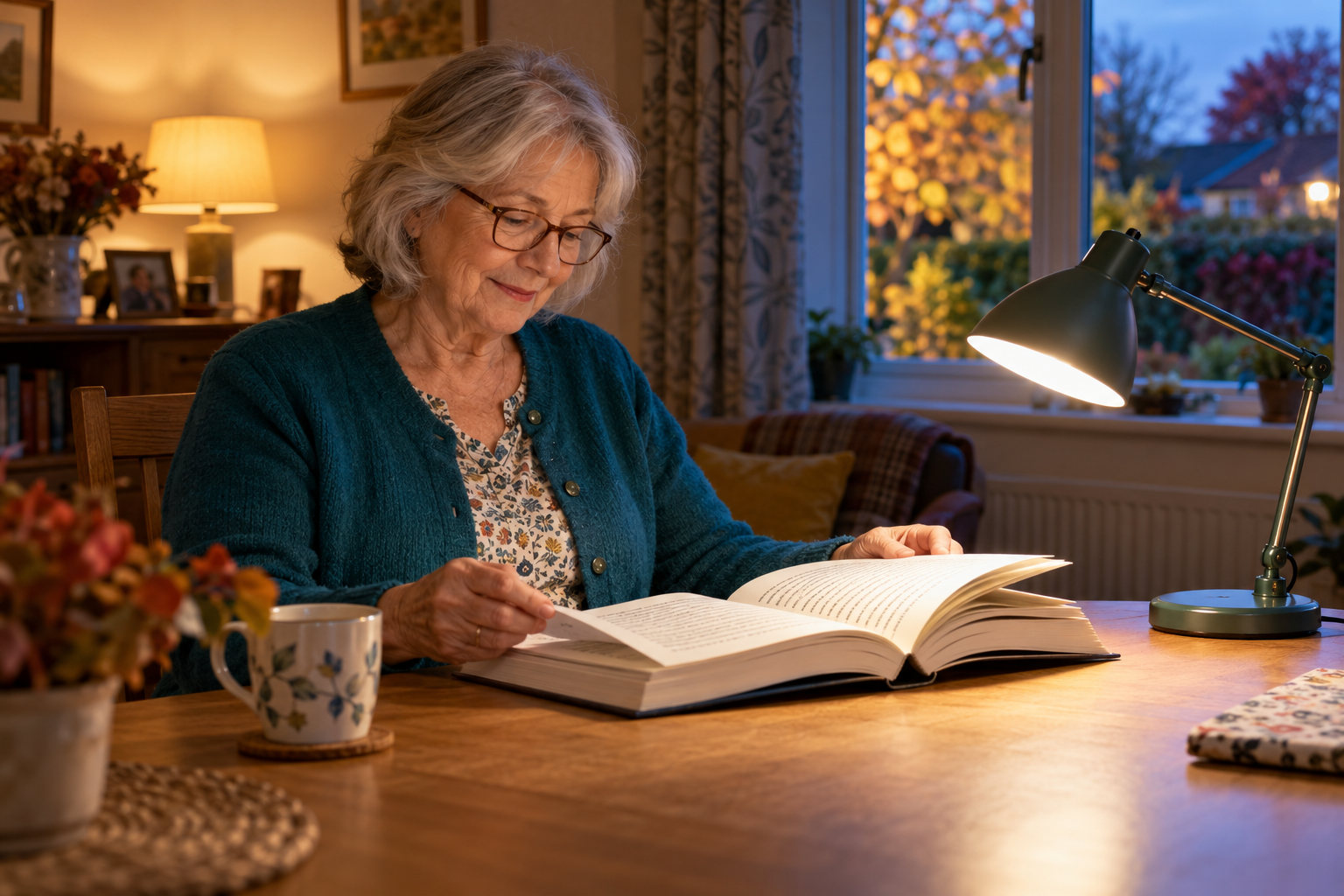
The same thinking applies indoors, where it is worth reviewing the lighting in the places you read, cook or pursue a hobby, as well as on stairs and in hallways. Anita Plant, Chief Executive Officer and Low Vision Assessment Officer at The Partially Sighted Society, suggests starting with a single task.
“When the evenings draw in, start with something you are finding harder, whether that is reading the post, preparing a meal or enjoying a hobby. Try adjusting your lamp’s position so the light falls onto what you are doing, without shining into your eyes or reflecting off the surface. Change one thing at a time and see whether it makes the task easier and more comfortable.”
The aim is lighting that feels comfortable as well as bright. Glare from a glossy page or worktop can obscure the very detail you are trying to make out, even in a well-lit room.
“Brighter is not always better,” Anita explains. “People with sight loss can have very different lighting needs. Sometimes moving a lamp or covering a shiny tabletop with a plain, matt surface can help.”
Visibility and keeping connected
Light matters outdoors as well, though there the challenge is helping others to see you. Lighter or reflective clothing makes you easier to spot after dark, and our Symbol of Visual Disability range, which includes lanyards, armbands and badges, can let people know that you have sight loss and may appreciate a little extra space or patience.
Beyond the practical steps, it helps to keep something in the diary. Plans give the week some shape and something to look forward to, whether that means meeting a friend earlier in the day, arranging to travel together or choosing somewhere familiar and easy to reach.
“If the darker evenings are making you think twice about going out, talk to someone about what would make it easier,” says Anita. “Perhaps a friend could meet you along the way, or an activity could be moved to an earlier time. It is understandable to feel less confident when the light changes, and it is worth asking for the support you need to keep doing the things you enjoy.”
That support can start with us. Our groups continue throughout the autumn and winter, offering the chance to enjoy a chat, take part in an activity and spend time with others who understand life with sight loss.
To find out what is on, or to talk through a difficulty you are having as the nights draw in, call us on 01302 965195 or email reception@partsight.org.uk
.