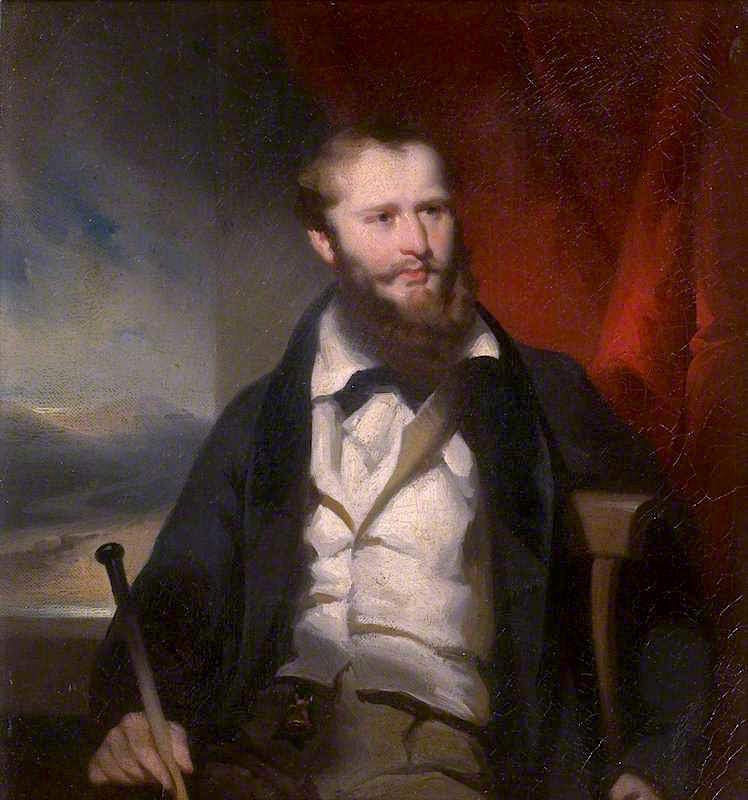
Arrested in Siberia, celebrated in Britain and later largely forgotten, James Holman lived a life that refuses to fit neatly into an inspirational tale. This October marks 240 years since the birth of a traveller whose greatest adventures began after he lost his sight.
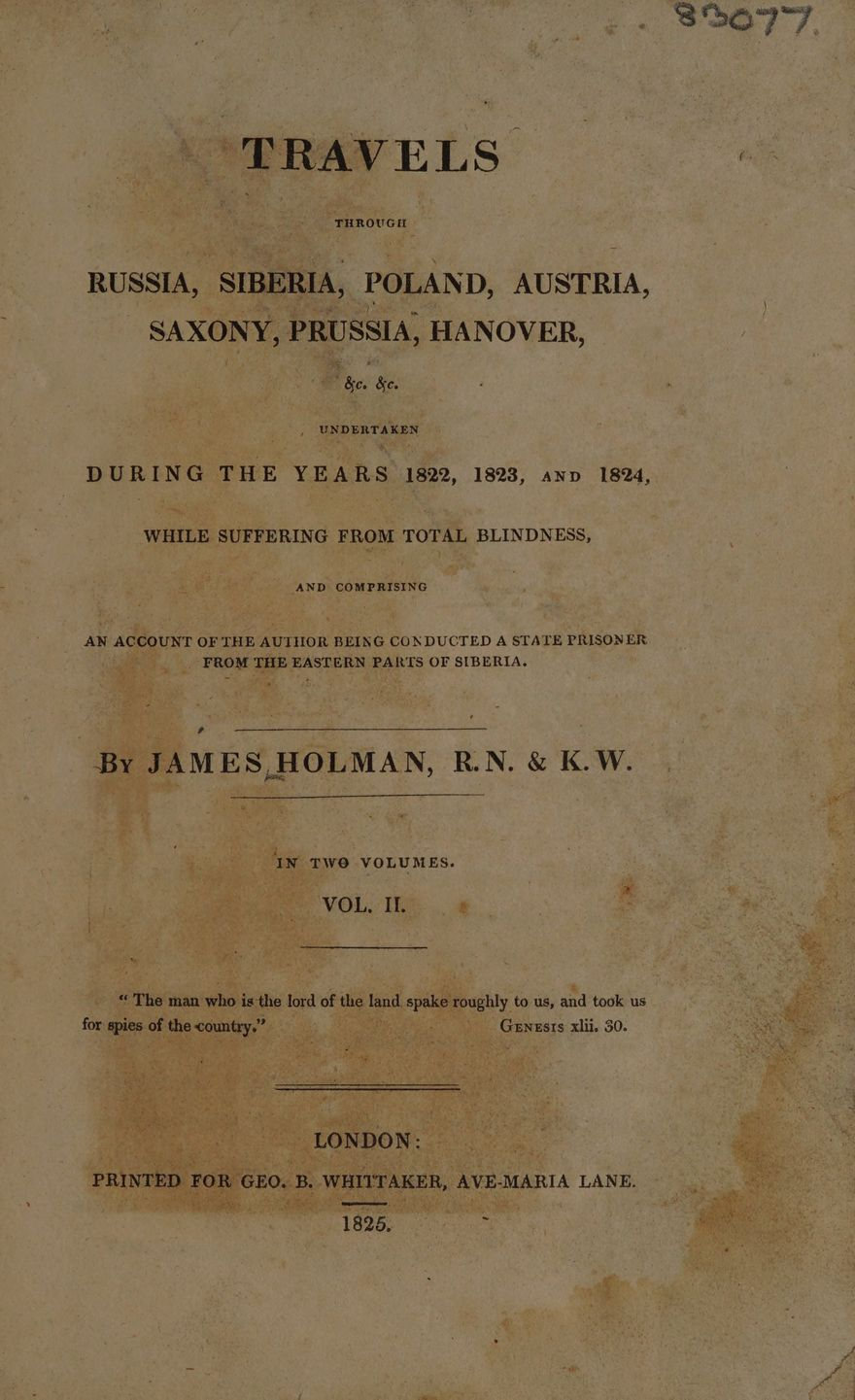
James Holman had travelled thousands of miles into Russia when the authorities decided he had gone far enough. His attempt to circle the globe was interrupted in Siberia, where he was detained on suspicion of being a spy and sent back towards Europe.
He was a former British naval officer, a stranger asking questions in unfamiliar places. That much was true. But Holman was also completely blind, and the journey he said he was making required people to accept something they often found difficult to believe: that a man who could not see the world might still be determined to explore it.
In 1824 he returned to Britain with his grand plan unfinished. He would eventually publish an account of being escorted out of Siberia as a state prisoner. For most travellers, that would have supplied enough material for a lifetime of dinner-party conversation. Holman was already partway through a much longer story.
A life apparently settled
Born in Exeter on 15 October 1786, the son of a chemist, Holman joined the Royal Navy at twelve. He became a lieutenant in 1807, with a career at sea ahead of him. Then illness intervened. Invalided out of active service in 1810, he suffered problems affecting his joints and, subsequently, his vision. By twenty-five, he was blind.
His later account offers little support for the idea that he simply took this in his stride. He remembered the uncertainty while doctors debated his prospects as worse than knowing the outcome.
Eventually, he asked them to tell him plainly what to expect. When the answer came, it brought an unexpected measure of relief. He could stop waiting for a recovery they could not promise and begin considering how to live. Even then, he did not immediately imagine himself crossing continents. His health was poor, and he doubted he would ever travel abroad alone. The confidence came gradually.
In 1812, an appointment as a Naval Knight of Windsor offered security, accommodation and religious duties. For a young man whose working life had been abruptly interrupted, it was a valuable arrangement. It also appeared to settle his future rather early. Holman found the quiet intolerable. He obtained permission to leave, studied in Edinburgh and eventually set off for continental Europe.
Between 1819 and 1821, Holman travelled through France, Italy, Switzerland and other parts of Europe. He visited places that attracted sighted tourists, finding his own ways to investigate them.
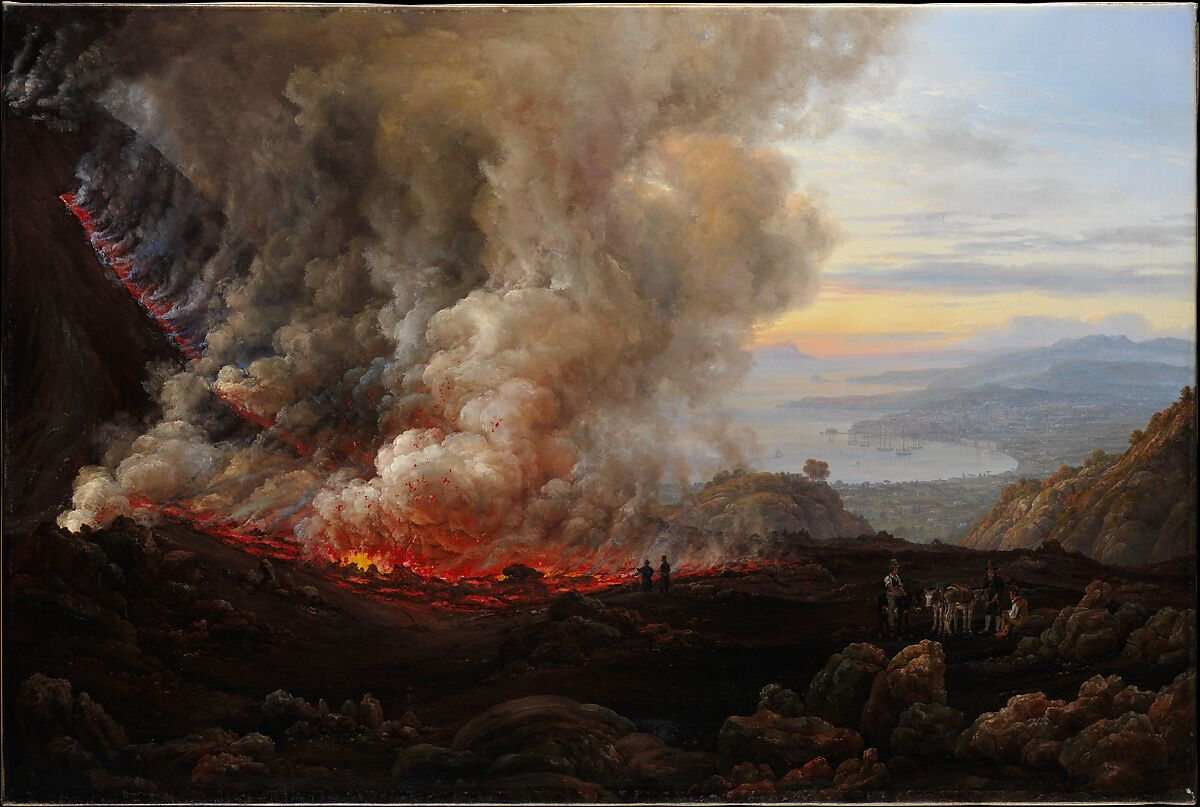
One excursion took him up Mount Vesuvius. In his account, the volcanic activity alarmed his sighted companions, who wanted to turn back. Holman continued until the rocks became uncomfortably hot to touch and his walking stick was charred.
Holman could be stubborn, and his curiosity sometimes carried him further up an active volcano than was sensible. His European travels became a book, published in 1822.
Then he enlarged his ambition: he would travel around the world, heading east through Russia. In Moscow he met another British traveller, John Dundas Cochrane, who tried to discourage him from continuing into Siberia. Cochrane eventually sold him his carriage, but their disagreement did not end there. In print, he later questioned whether a blind man 's account could be reliable without visual evidence.
Holman went on. The Russian authorities, however, proved harder to get past. His journey ended in detention and a forced return west. Holman 's accounts found readers, and in 1826 he was elected a Fellow of the Royal Society. Yet behind the public interest lay a question he heard so often that he addressed it directly in his writing: what pleasure or purpose could travel possibly hold for someone who could not see?
His reply was practical. Sighted travellers also relied on other people. They asked questions, listened to explanations and collected information they could not personally verify by looking. Why should his use of those methods invalidate the journey? “Does every traveller see all that he describes?” he asked.
Holman described having objects and surroundings explained on the spot, pursuing details and questioning people persistently.
Touch gave him another means of examining what he encountered. He argued that the need to investigate could encourage closer attention than a quick glance. Looking at somewhere and understanding it are different achievements.
He also travelled with help. Accounts that describe him as travelling alone generally mean without a permanent companion, rather than without assistance from anyone. His own narrative records guides, hosts and people who attended him. He drew on relationships and accepted practical support while deciding where he wanted to go.
Another departure
In 1827, Holman sailed aboard HMS Eden for the west coast of Africa. Five years of travel lay ahead. Cabins could become oppressively hot. He preferred sleeping on deck, accepting occasional soakings beneath an awning rather than the heat below. Fever spread through the ship and settlement, and entries recording visits and daily business were interrupted by deaths.
Among those taken ill was Ware, a boy of about fourteen whom the captain had appointed to attend him. Holman recorded his anxiety as the boy 's breathing became so alarming that recovery seemed unlikely.
Then the symptoms eased, and after several hours of sleep, Ware woke showing signs of improvement. Holman eventually secured passage on a Dutch vessel to Brazil, where an expedition into the mining districts brought a different kind of danger.
Travelling with Captain George Francis Lyon, he faced a descent so steep that few people attempted it on horseback or muleback. Holman described the mules sliding on their haunches over the rocky surface, with a precipice below. Lyon, who had previously avoided riding down it, went first so that Holman could follow. Much now depended on the animal beneath him. His mule shook its head when he held the reins too tightly. Where the ground was uncertain, it stopped and tested the surface with a hoof before advancing. Holman loosened his control and trusted it to pick a way down.
The journey continued to southern Africa, Mauritius, Ceylon [now Sri Lanka], India, China and Australia. In 1832, Holman returned to Britain, having completed the journey around the world that Siberia had previously interrupted.
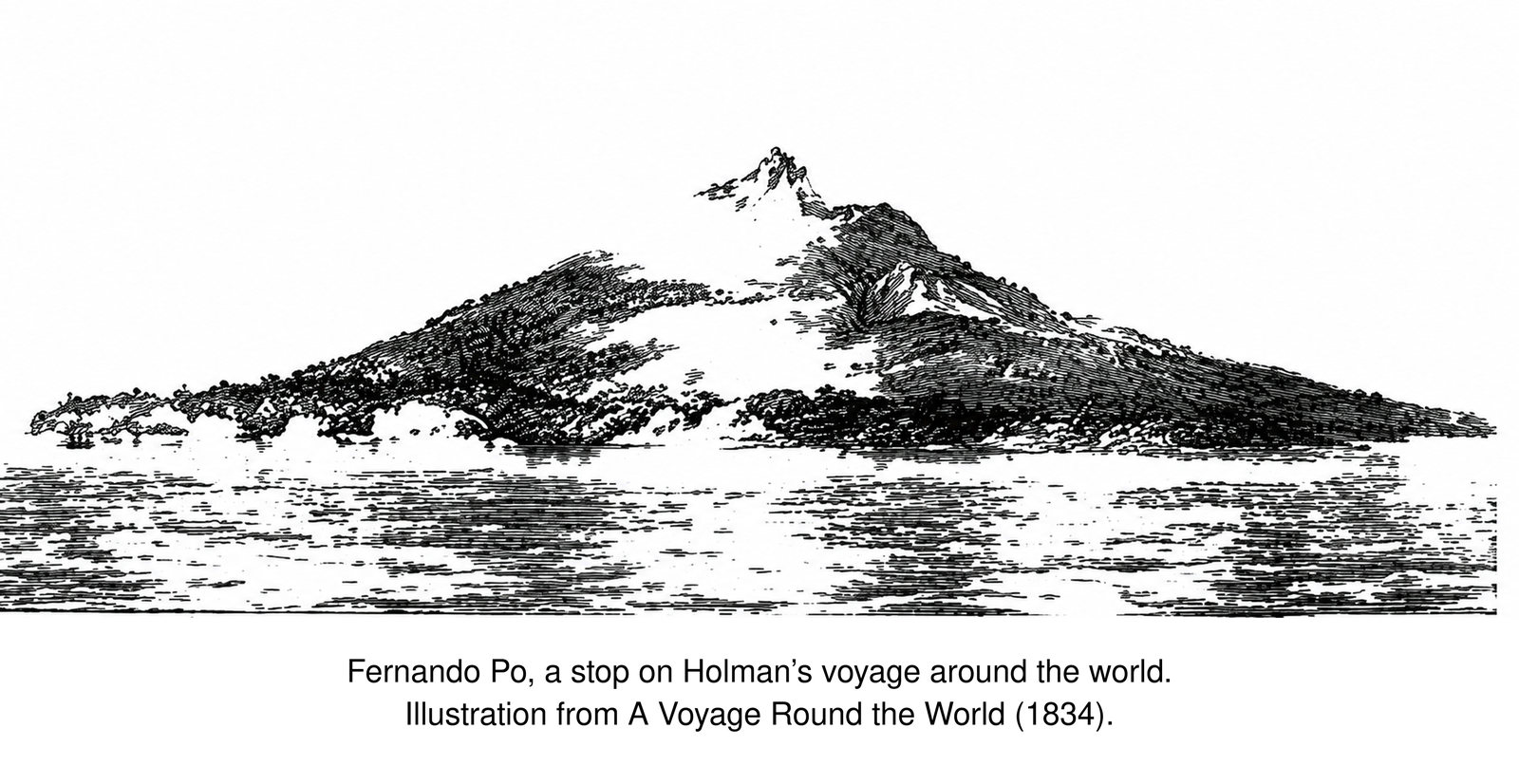
The result appeared in four volumes in 1834 and 1835: A Voyage Round the World. He had returned with more material than ever before. This time, however, readers were harder to find.
The new books did not repeat the success of his earlier accounts. Interest faded, money remained a constraint and his achievement failed to secure lasting fame. Holman had answered doubts about whether he could travel by undertaking a vast journey. Completing it did not oblige the reading public to keep paying attention.
He eventually travelled again, visiting parts of southern and eastern Europe and the Middle East. Even in later life, the next departure continued to draw him away from home.
Yet the record ends with work unfinished. Holman died in London in July 1857 while preparing the journals of his last travels for publication. Those accounts never appeared in print. The man who had spent decades gathering experiences left some of them beyond his readers ' reach.
Still curious
Holman had begun his travels uncertain whether he could ever leave Britain alone. He went on to cross continents and write about his experiences, through illness, official suspicion and financial setbacks. His determination kept him travelling, but it could not guarantee a welcome, an audience or financial security.
For some readers living with sight loss, the most familiar part of his story may come before the ships and Siberia: the feeling that others have already decided what your future will look like, while you are still discovering what you want from it.
Nobody needs to climb a volcano or cross a continent to justify wanting an interesting life. Holman happened to want both. Others might want to return to a familiar walk, take a train to visit a friend or try something they have been told will be too difficult.
Two hundred and forty years after his birth, what stays with us is his insistence that there were still places he wanted to go. The future others considered settled was, to him, still an open question.