Every ingredient has a voice, and most of it never makes it into a recipe. Butter in a warm pan starts with a lazy hiss, then falls to a faint crackle once its water has cooked away, which is the moment it begins to brown. Onions open with a loud sizzle and settle into a low murmur as they soften. Whole spices pop and skitter in hot oil, then quieten as their fragrance blooms, a signal that they are done and about to turn bitter.
Smell is the second language, and it is often the earliest to speak. Toasting bread gives itself away minutes before it is ready, with a deep, caramel sweetness that drifts through the house. A cake announces itself in much the same way, warm and buttery, shortly before the timer sounds. Garlic goes from sharp to sweet to acrid in under a minute, and a nose that has learned the difference will rescue a pan long before a timer could.
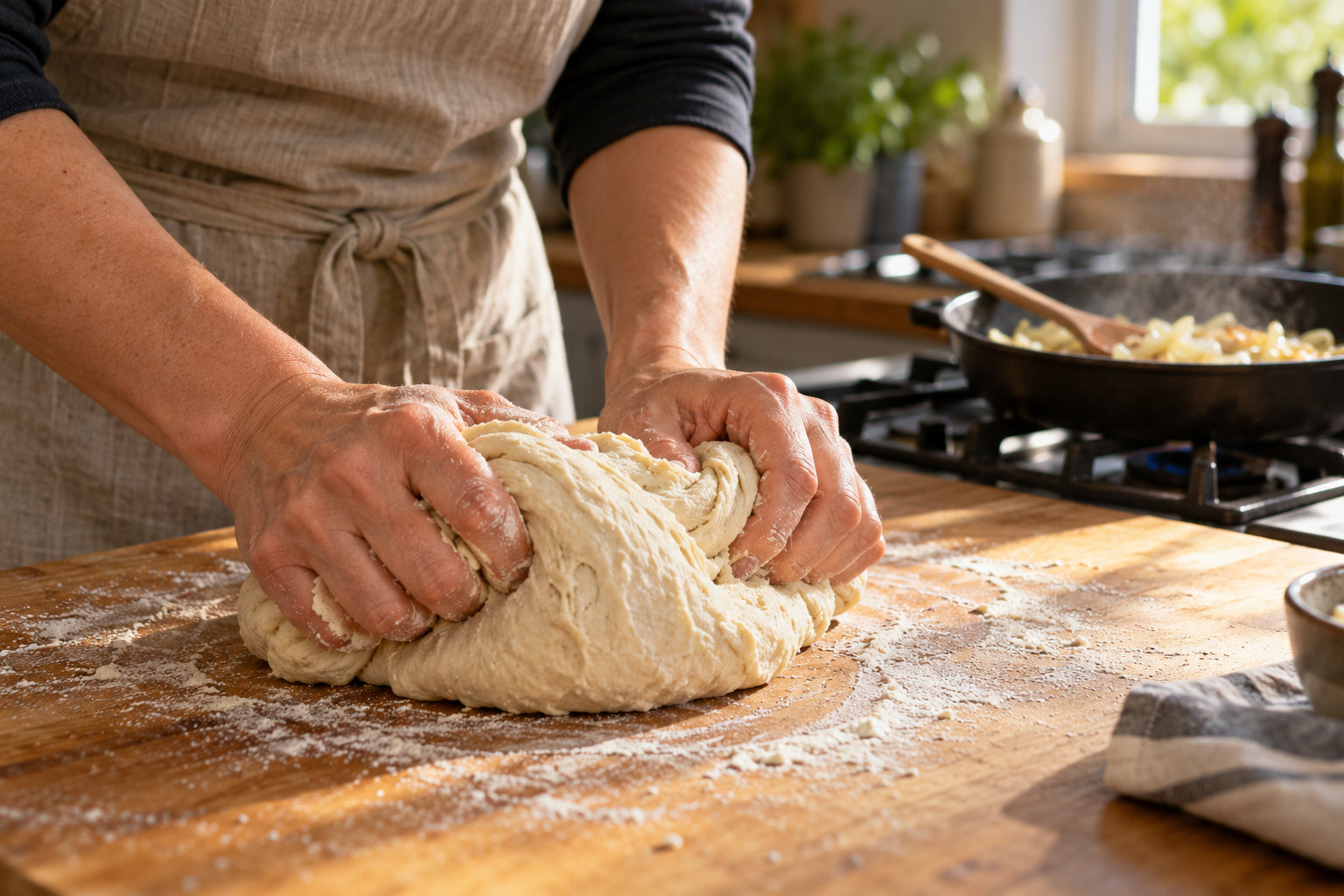
Touch completes the conversation. Dough tells you it has been kneaded enough by turning from sticky to smooth and elastic under your palms. Pasta should offer a little resistance at its centre when you bite it. A steak firms as it cooks, in the same way the fleshy base of your thumb tightens as you press it against each fingertip in turn, from soft and rare to taut and well done.
Next time you cook, try a small experiment. Switch off the radio for the first few minutes and let the kitchen do the talking. Notice the pitch of the sizzle, the moment the smell shifts, the give of the dough beneath your hands. These cues are easy to miss when attention is elsewhere, yet they are among the oldest instructions in cooking, passed down long before anyone wrote a recipe or set a timer. Learn a few, and every meal becomes a little more like a conversation.
Recipe of the month: Carrot, sweet potato and coconut soup
Serves: 6 generously | Preparation: 20 minutes | Cooking: 40 minutes
You will need a large saucepan or stockpot of about 4 to 5 litres, and a hand blender or jug blender.
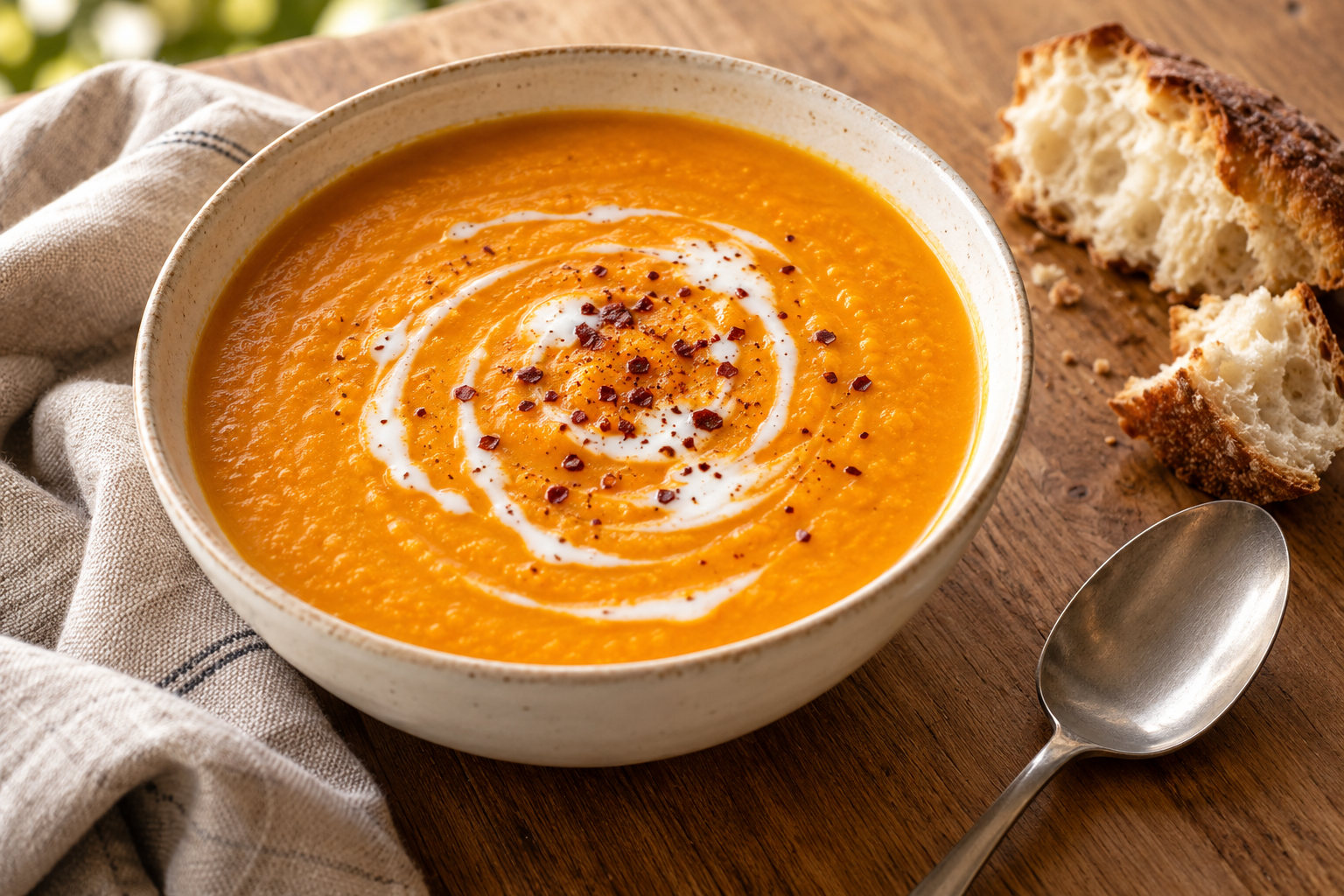
Autumn asks for a particular kind of cooking, the kind that fills the kitchen with warmth and rewards a little unhurried attention. This carrot and sweet potato soup answers that call. Its base is gentle and earthy, the natural sweetness of the vegetables deepened by slow cooking, then softened further with coconut milk until the whole pot turns smooth, velvety and the colour of fallen leaves.
Chipotle chilli is what lifts it beyond the ordinary. It brings a low, smoky heat that arrives gradually rather than all at once, leaving a gentle tingle after each spoonful and a warmth that stays with you long after the bowl is empty. Alongside it, softened onion and golden garlic give the soup a savoury backbone, so every mouthful feels rounded and complete.
It is simple food, made in one pan with ingredients that are easy to find, and it is at its best on the kind of evening when the light fades early and the first chill of the season is in the air. Ladle it into a deep bowl, add a swirl of coconut milk if you like, and tear a piece of crusty bread for dipping.
Ingredients
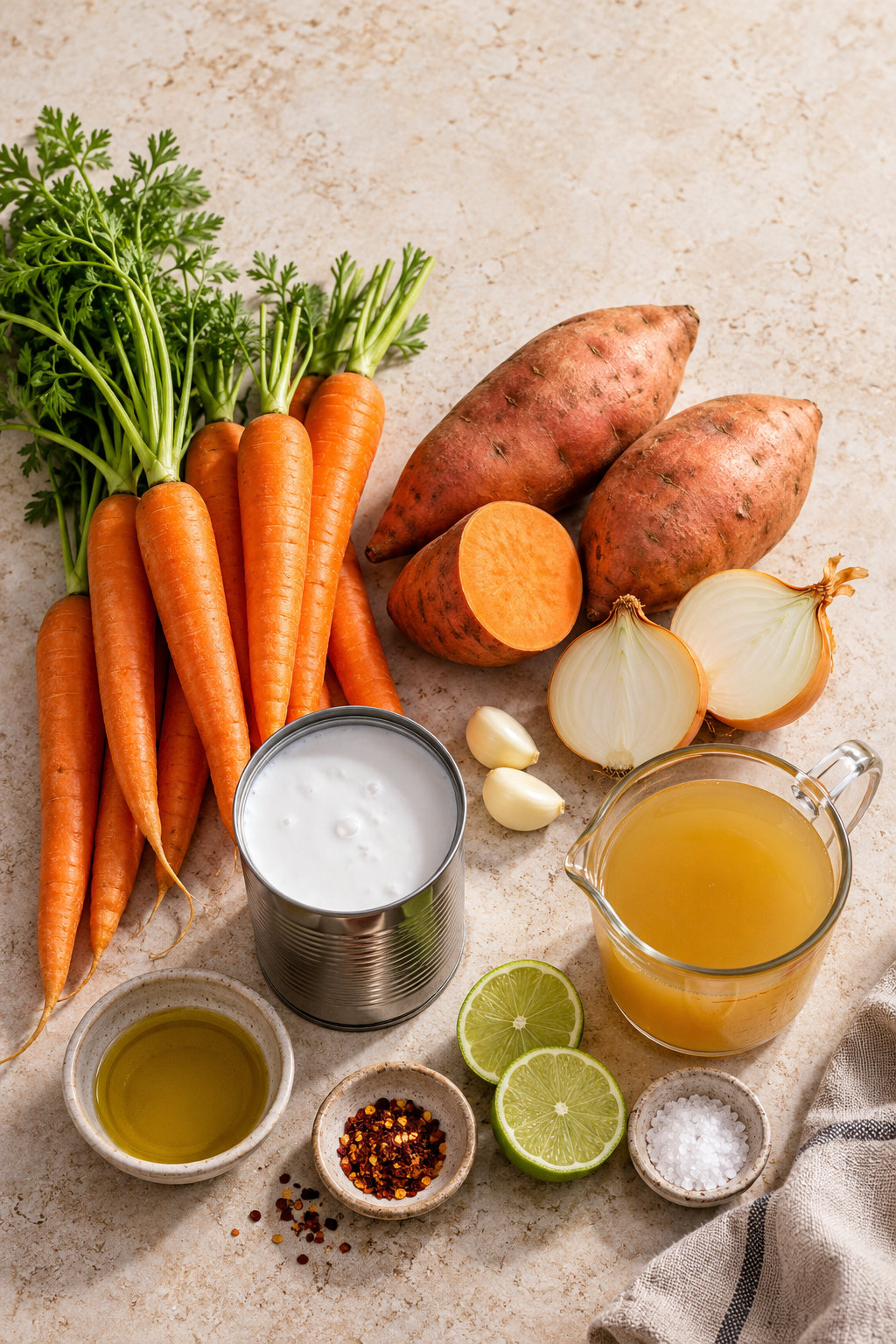
- 1 tablespoon olive oil
- 1 cup finely chopped onion
- 2 garlic cloves, crushed or finely chopped
- 4 cups chopped carrots
- 3 cups peeled sweet potato, cut into roughly 2 centimetre cubes
- 1 small pinch of chipotle chilli flakes, optional
- 3 cups reduced-salt vegetable stock
- 1 whole 400 millilitre tin of coconut milk
- 1 tablespoon lime juice, plus more to taste
- Salt, to taste
Method
- Soften the onion. Heat the oil in a large saucepan over a medium-low heat. Add the onion and cook for 7–8 minutes, stirring regularly. Listen for a gentle, steady sizzle rather than fierce crackling. The onion’s sharp smell will gradually become sweeter.
- Add the garlic and chilli. Stir in the garlic and optional chipotle flakes. Cook for 30–60 seconds, until you notice the fragrant garlic and smoky chilli aroma.
- Simmer the vegetables. Add the carrots, sweet potato and stock. Bring to the boil, then reduce the heat to a gentle simmer, with soft, occasional bubbling. Partly cover and cook for 20–25 minutes, stirring occasionally.
- Check for tenderness. Spoon a piece of carrot and sweet potato onto a plate. Both should squash easily under a fork, without a firm centre. If needed, cook for another 5 minutes and check again.
- Add the coconut milk. Stir in the whole tin of coconut milk. Remove the pan from the heat and allow the soup to cool slightly before blending.
- Blend until smooth. Place a hand blender into the soup before switching it on. Keep the blade head submerged to prevent hot splashes, and switch it off before lifting it out. Pause to stir and check for remaining chunks. If using a jug blender, follow its instructions for hot liquids and work in small batches.
- Warm and finish. Return to a low heat, stirring until hot throughout. Add the lime juice. Allow a spoonful to cool before tasting, then add salt or more lime juice if needed. For a thinner soup, stir in a little extra water or stock.
Make it your own
Leave out the chilli for a mild soup. Chipotle flakes vary in strength, so start with a small pinch and add more to taste.
Increase protein and fibre
Stir one drained and rinsed 400g tin of lentils or chickpeas into the soup at the start of step 6 and blend them in with everything else. Lentils give a smoother texture, while chickpeas make it slightly thicker. Add a splash of water or stock at step 7 if the soup has become too thick.
Save some for later
Freeze the whole batch or just the leftovers in individual portions. Divide into smaller containers, cool quickly and refrigerate or freeze within 1–2 hours. Leave a little space in each container for expansion.