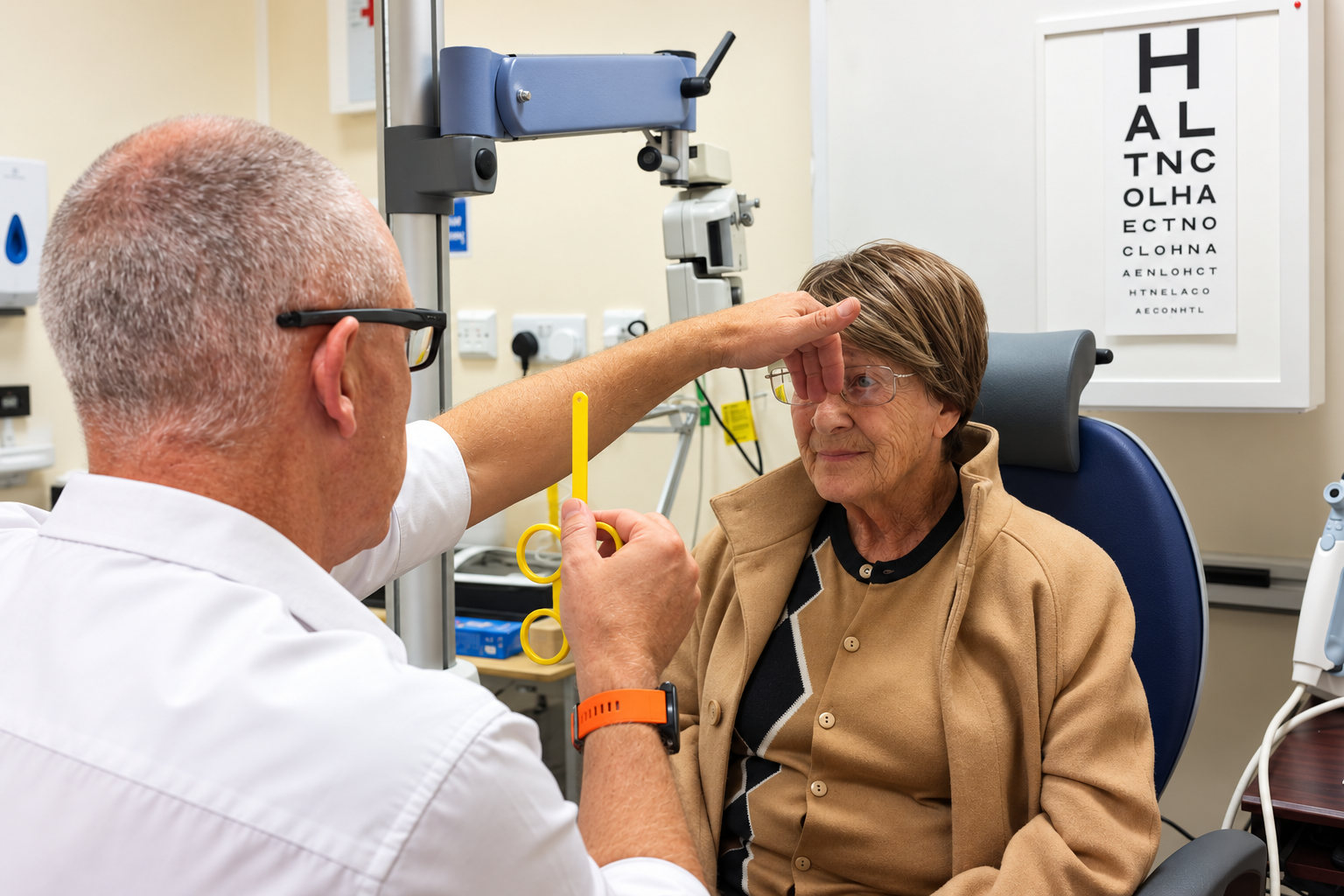
If you have never had a low vision assessment, you may be wondering what it involves. Will there be lots of tests? Will anyone have time to answer your questions? And can anything really help with the things you are finding difficult?
At The Partially Sighted Society’s Sight Centre in Doncaster, we start with you: what has changed, what is troubling you and what you would like to find easier. There is time to talk, people who will listen and the chance to try things that could make a real difference to your day.
We also know that getting in touch can feel like a big step. You may still be coming to terms with a diagnosis, or you may have spent months managing on your own. Knowing what to expect can make that first visit a little easier, so here is how it goes, from your first hello to the moment you head home.
The first call
Sometimes, picking up the phone is the hardest part. Saying out loud that your sight is changing, or that something you once did without thinking has become a struggle, takes courage.
If you have been putting off calling, please know that you do not need the right words or a clear idea of what help you need. Reaching out is something to be proud of, and we will be glad you did.
Your call will be answered by Nicola, Marcus or Shaun. They will listen first. They will ask what you have been experiencing, talk through how we might help and answer any questions you have about coming to see us.
If a low vision assessment feels like the next step, they will book you in with Anita, our CEO and Low Vision Assessment Officer, and Gary, our Optometrist.
Arriving and settling in
When you arrive, we will welcome you and show you to our waiting room, where Nicola, our administrative assistant, will be working nearby. Take a seat and give yourself a moment. There is no need to feel rushed.
From the outside, the Sight Centre looks fairly modest. Inside, it is actually a bit like the Doctor’s TARDIS. It keeps going well beyond the waiting room, and you will see a little more of it as your visit unfolds.
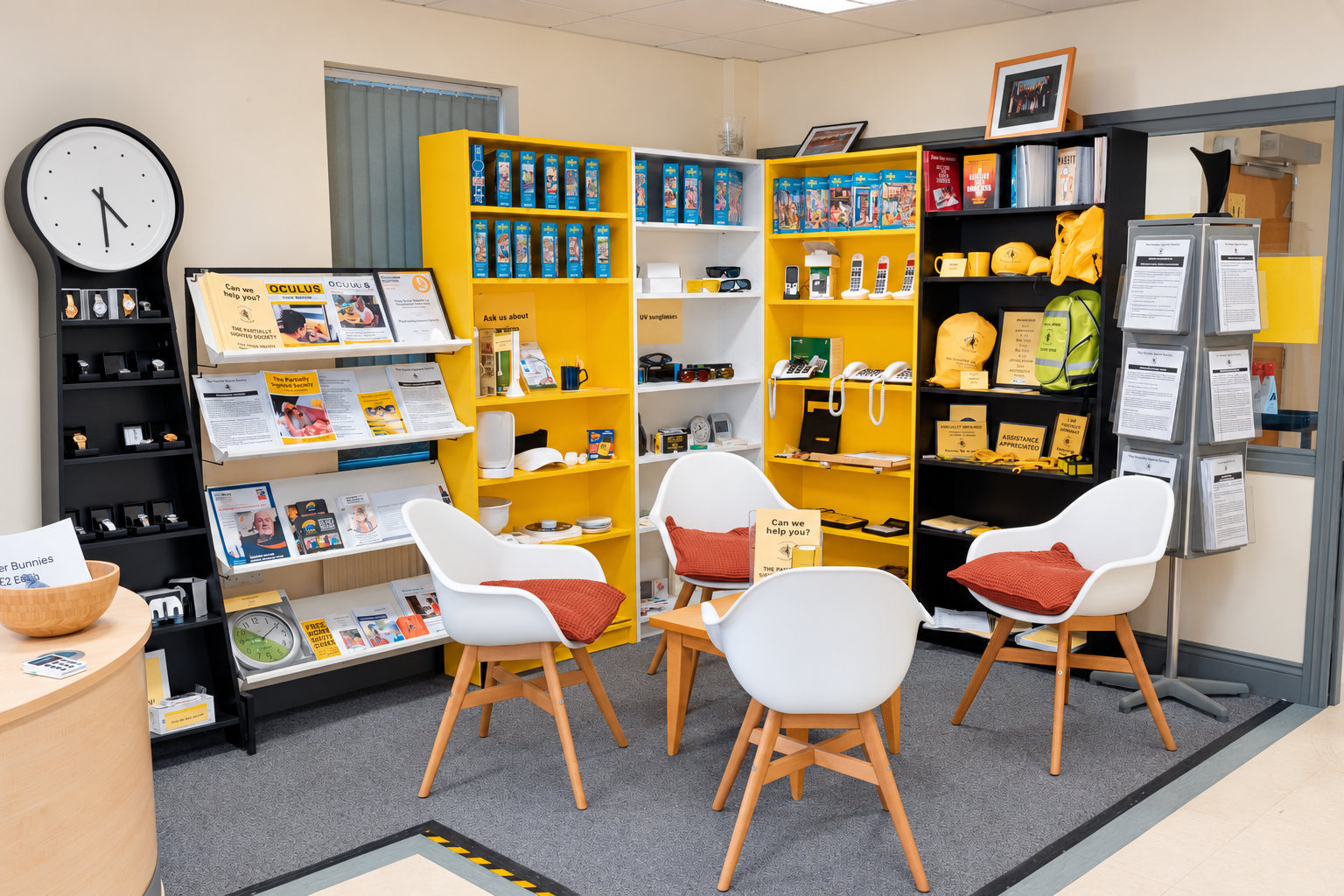
When it is time for your assessment, we will take you through and explain what happens next.
Starting with you
Your assessment begins with a conversation. Anita will introduce herself and Gary, then invite you to tell them what has brought you to see us. They will take a few details and ask about your vision, your general health and any medication you use, helping them understand what you have experienced so far.
If you have letters or information from hospital or optician appointments, bringing these along can help build that picture. If a family member or friend has come with you, we encourage them to join you for the appointment, if you are comfortable with that. A spare pair of ears can be helpful, especially when there is a lot you want to remember.
There is room for your questions from the very beginning, whether something has been on your mind for months or has only just occurred to you. Anita can use a model of an eye to explain, in plain English, what has happened to your vision and help make sense of anything you have been told.
They will also want to know more about you: what you enjoy, what matters to you and whether your sight has stopped you doing things you love. One question they always ask is: “How do you want us to help you today?”
Understanding what is happening with your eyes
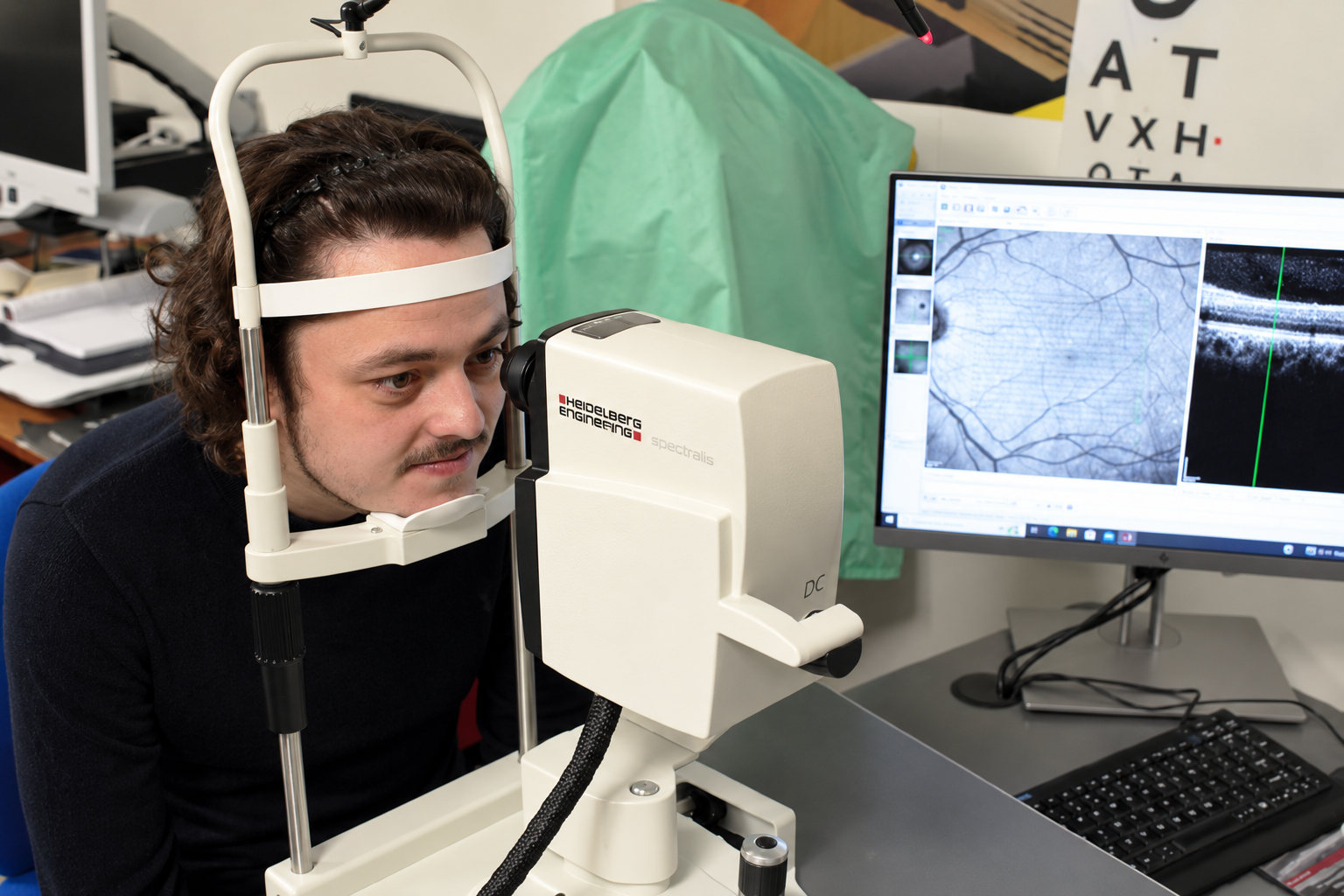
The next step is an OCT scan. The full name, optical coherence tomography, sounds far more complicated than the experience itself.
You rest your chin on a support and look towards a light while the machine takes detailed pictures of the back of your eye. It uses light rather than sound to build up cross-sectional images, a little like an ultrasound. The scan is quick and painless, and nothing touches your eye.
Gary will explain what he is doing as he goes. Afterwards, he will talk you through what the images show and what that means for your vision.
For many people, having time to understand their eye condition is one of the most valuable parts of the visit. You may have been told its name without ever quite understanding it, or thought of a dozen questions long after leaving a previous appointment. Here, you can ask them, and if something still does not make sense, we will go through it again. You should never have to leave with a head full of unfamiliar medical terms and no answers.
A full eye examination
A few steps away is the optometry room, where Gary will carry out a full eye examination. As before, he will explain each step and talk with you about whether a change to your glasses prescription could help.
Anita will join you for this part of the appointment too. Being there for the examination and hearing Gary’s findings helps her understand your vision and how she can support you with the practical things you would like to do.
We can now dispense glasses at The Partially Sighted Society, so you are welcome to have them made with us. You are equally welcome to take your prescription elsewhere. We are not an NHS practice, so NHS optical vouchers cannot be used here.
The scan and examination together can take up to an hour, sometimes a little longer. That is deliberate. There is time built in for conversation, because understanding your results matters just as much as the tests themselves.
What would make your day easier?
Once Gary has finished, you will return to the assessment room with Anita to explore what might help in everyday life. This builds on the things you spoke about at the beginning, now with a fuller understanding of your vision.
Perhaps you miss reading for pleasure, struggle with the instructions on food packaging or have stopped a hobby you loved. Perhaps there is something you still manage, but only with a great deal of effort. Together, you can take a closer look at those difficulties and try ways to make them easier.
Anita will introduce you to aids and ideas that could help. That might be a handheld magnifier, a digital magnifier or a kitchen gadget that makes a familiar task feel manageable again. Sometimes a small change turns out to be surprisingly useful.
You can try things for yourself, compare them and talk through what feels comfortable. Nobody expects you to know how anything works before you arrive. That is what we are here for, and you are welcome to ask a question or simply talk at any point during your visit.
When there is more to talk about
A conversation about daily life often leads somewhere else. You might mention that your phone has become difficult to use, that your confidence has taken a knock or that you are spending more time on your own than you would like. You can talk to us about all of that too.
If technology could help, Shaun may join you to explore the options. That might mean making your existing phone or tablet easier to use, trying an assistive device or finding a new way to do something that has become frustrating.
If the emotional side of sight loss is weighing on you, we can refer you to Nickie, our Mental Health and Wellbeing Lead and Art Psychotherapist. Karin, our trainee art psychotherapist, may also be involved. Adjusting to sight loss can bring all sorts of feelings, and you do not have to work through them alone.
And if you would simply enjoy a familiar voice and a regular catch-up, our volunteers Georgina and Sunita can offer a weekly telephone call. A conversation to look forward to, with someone who has time to listen, can mean a great deal.
The door stays open
Before you leave, we will talk about when it would be helpful to see you again. That might be in six months, a year or longer, depending on your circumstances.
You do not have to save every question for your next appointment. If you get home and realise there was something you meant to ask, or you need more help with an aid you have tried, please get in touch.
If your vision changes suddenly, seek urgent medical advice rather than waiting to see us, and please keep any appointments with your hospital eye clinic or other eye care professionals. You are also very welcome to join our social and support groups in Doncaster. They are a chance to meet people who understand some of what you are going through, enjoy good company and make new friends.
Our hope is that by the time you leave, the Sight Centre will feel like somewhere familiar, with people you know you can turn to. Your appointment is just one part of that. It does not end with a goodbye at the door.
Getting in touch
If you or someone you know could benefit from our support: Call us on 01302 965195 or email reception@partsight.org.uk . Whether you are ready to book an appointment or would simply like to talk it through, we would be pleased to hear from you.
Your low vision assessment and our support services are free at the point of service. If you choose to buy glasses or equipment, we will explain any costs beforehand.
As a charity, we rely on the generosity of our supporters to keep that help available. Donations are always gratefully received, but there is no obligation to give.
What matters most is that you feel able to come to us when you need support.